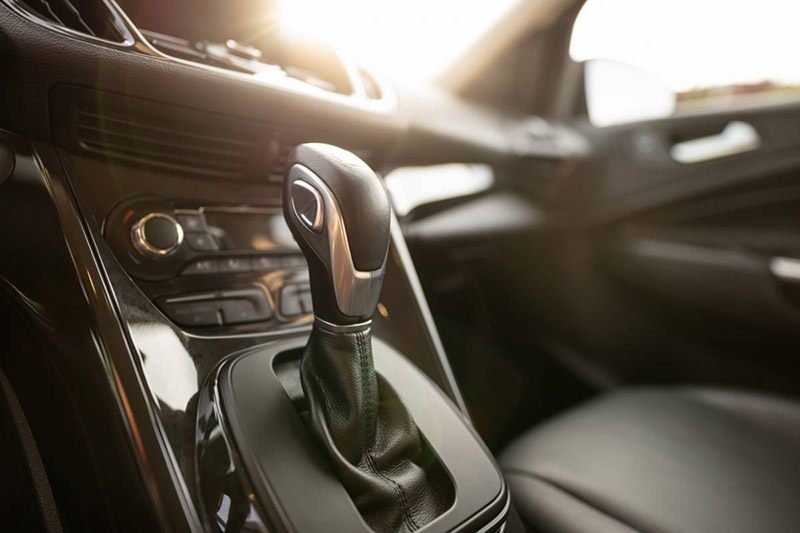
You move the shifter into Drive and nothing happens. Or maybe Reverse works but Drive does not. The shifter could be stuck in Park. The dash may say the vehicle is in gear even though it will not move.
All of those can get described as "the transmission won't go into gear," but they do not necessarily have the same cause. Before deciding the transmission itself has failed, it helps to separate what the shifter is doing from what the vehicle is doing.
Is the shifter stuck, or does the vehicle fail to move?
If the shifter physically will not move out of Park, the problem may be with the shifter itself, the brake switch, a cable, or another part that tells the vehicle it is safe to shift.
That is different from a shifter that moves normally into Drive or Reverse while the vehicle itself refuses to move. In that case, the transmission may be receiving the driver's command but failing to apply the gear.
A vehicle that moves in one direction but not the other gives the shop another clue. So does a vehicle that will move only after a long delay.
The symptom sounds simple, but there are several different versions of it.
What can cause a transmission not to engage?
Low transmission fluid is one possibility. An automatic transmission needs the correct amount of fluid to create the pressure that applies each gear. If the level gets too low, the transmission may hesitate, slip, or fail to engage at all.
A damaged or disconnected shift cable can also prevent the transmission from reaching the gear you selected, even though the transmission itself may be fine inside.
Modern vehicles also use sensors, wiring, and computer-controlled parts to manage shifting. If one of those systems fails, the transmission may not receive or carry out the command correctly.
Then there are worn or damaged parts inside the transmission itself. Those can also prevent a gear from applying.
The point is that a vehicle that will not go into gear can turn out to have a smaller outside problem or a more serious internal one. You cannot tell which one it is just from moving the shifter.
Do not keep revving it to make it catch
If you put the vehicle into Drive and it does not move, pressing the accelerator harder is not a good test.
Sometimes a struggling transmission will suddenly engage after the engine has been revved. When that happens, the vehicle can jump or slam into gear because the engine is already spinning much faster than it should be when the gear finally applies.
Repeatedly moving the shifter back and forth or trying to force it into gear can add more stress without giving you a useful answer.
If it will not engage normally, leave it alone and have it checked.
What if it still moves in one gear?
Being able to move the vehicle does not always mean it is a good idea to drive it across San Antonio.
If Reverse works but Drive does not, or the transmission only works in certain gears, the vehicle is not operating normally. The remaining gear may be enough to move the vehicle a short distance to safety, but it should not be treated like normal transportation.
Depending on the problem, the transmission may lose additional gears or begin slipping more severely.
For a vehicle that will not reliably go into gear, towing is usually the cleaner choice. Sergeant Clutch offers free towing with transmission service.
Why heat can change the problem
Some transmission problems behave differently when the vehicle is cold than when it is hot. Fluid gets thinner as it warms up. Electrical parts can fail only after they heat up. Worn seals and other internal parts can also behave differently after the transmission has been driven for a while.
In San Antonio summer traffic, the transmission can reach operating temperature quickly. If the vehicle goes into gear normally when it is cold but stops engaging after twenty minutes of driving, that is useful information for the shop.
The same is true if the problem only happens first thing in the morning.
What Sergeant Clutch checks
At Sergeant Clutch Certified Engine & Transmission Repair Shop, the first step is confirming exactly what the vehicle is doing. The shop can inspect the shifter and cable, check the transmission fluid where applicable, scan the vehicle for warning codes, and test whether the transmission is receiving and carrying out the driver's command.
If the problem is electrical or outside the transmission, the repair should follow that diagnosis. If the transmission has an internal failure, the shop can explain what has failed and what repair options make sense.
A code or symptom is not a reason to start replacing parts blindly. The test results should point to the repair.
What to tell the shop when you call
Tell us whether the shifter moves normally, whether the vehicle moves in Drive, Reverse, or neither, and whether the problem happens every time or only sometimes. Mention any warning lights, leaks, unusual noises, or recent repairs.
You do not need to know what any transmission part is called. Describe what the vehicle does and when it does it.
Sergeant Clutch is located at 6557 Walzem Road in San Antonio and serves the Northeast Side, Windcrest, Converse, Live Oak, Universal City, and surrounding communities.
If your vehicle will not shift into gear, call Sergeant Clutch at (210) 239-1600. Financing is available through Synchrony Car Care, EasyPay Finance, and SNAP Finance.
Transmission trouble?
Towing available. Military & senior discounts. Payment plans, no credit needed*.
(210) 239-1600 Book an Appointment