Is your Nissan Altima, Rogue, or Sentra whining when you speed up? Does it shudder when you pull away from a stop, or rev high without picking up speed? Has it suddenly lost power and refused to go faster than a crawl? If you drive a Nissan here in San Antonio and any of that sounds familiar, the CVT is the most likely place to look. Nissan CVT trouble is common enough that a lot of owners have heard about it before it ever happens to them. Here is a plain explanation of what a CVT is, why it acts up, and what to do next.
What a CVT is, in plain terms
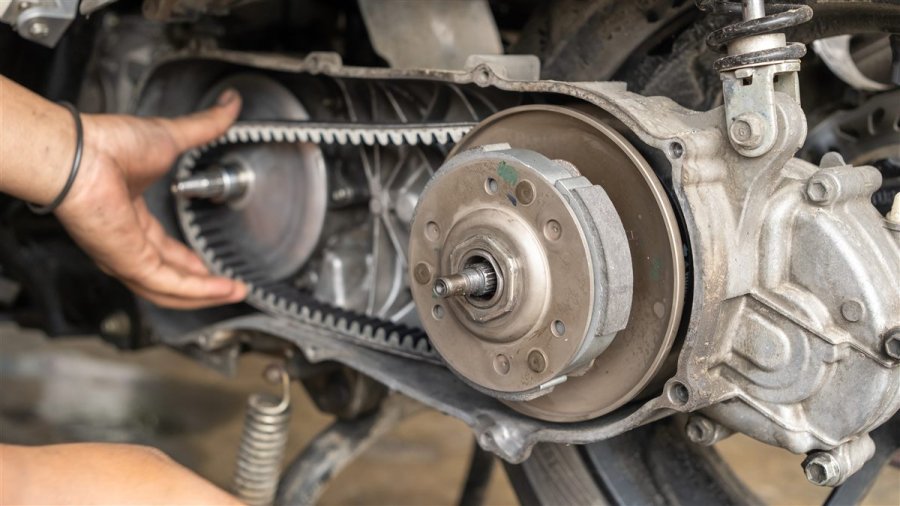
Most automatic transmissions have a set number of gears, and you can feel the car click from one to the next as you speed up. A CVT, short for continuously variable transmission, does not work that way. Instead of fixed gears, it uses a strong steel belt running between two pulleys that can widen and narrow. As those pulleys change size, the ratio changes smoothly, a little like a bicycle that could shift through endless gears without any steps between them.
That is why a healthy CVT feels so smooth, and it is also why it can sound unusual to someone new to it. The engine speed may stay steady while the car gains speed, which is normal. Our CVT transmissions page goes into more detail on how these work and which sounds are normal.
Nissan uses CVTs in most of its cars and crossovers, including the Altima, Sentra, Versa, Rogue, Kicks, and Murano, and in some years of the Pathfinder. The Frontier and Titan pickups use conventional automatics instead.
What Nissan CVT drivers tend to notice
The complaints we hear from Nissan owners tend to follow a pattern. A whine or a hum that gets louder as you accelerate is one of the most common. A shudder or shake when pulling away from a stop is another, and it can feel like driving over rough pavement when the road is smooth. Some drivers notice a lag, where they press the gas and the engine revs but the car takes a moment to catch up. Others describe a rubber band feeling, where the car seems to stretch before it moves.
One of the more alarming ones is when the car suddenly loses power and will not go much faster no matter how hard you press the gas. That is usually the CVT protecting itself, often because it has gotten too hot. It is the car asking to be checked, not a sign that it is about to fall apart on the spot.
If you want to read more about these symptoms, our pages on shuddering when accelerating, grinding or whining noises, and transmission overheating cover each one.
Why it happens
CVTs depend heavily on their fluid. The belt and pulleys need clean fluid in good condition to grip properly and stay cool. Heat is the biggest enemy, and San Antonio summers, stop and go traffic on Loop 410 and I-35, and long idling with the AC running all push CVT temperatures up. As the fluid breaks down, the belt and pulleys start to wear, which leads to whining, shudder, and slipping. The electronic controls that manage the CVT can also cause problems, and sometimes a software update is part of the answer.
Some of these issues can be handled with a fluid service or a smaller repair, especially when caught early. Others need a rebuild or a replacement. You cannot tell which by sound alone, which is why we diagnose first.
How we handle Nissan CVTs
You do not need to know what is wrong before you call. At Sergeant Clutch Certified Engine and Transmission Repair Shop on Walzem Road on the Northeast Side of San Antonio, our certified mechanics start by finding the real cause. We check the fluid, scan for codes, and test how the CVT behaves, then explain in plain terms what is going on and what your choices are. Sometimes the answer is that what you are hearing is normal CVT behavior, and we will tell you that too. Nothing gets done without your approval.
We repair and rebuild CVTs, and when replacement makes more sense, we install Jasper remanufactured transmissions. You will know the problem and the plan before we pick up a tool, and we stand behind the work with a limited parts and labor warranty.
Can you keep driving it
If your Nissan has gone into a reduced power mode, or the whining and shudder are getting worse, it is better to stop driving it and have it checked. Pushing a CVT that is already overheating tends to add wear. If the symptom is mild, keep your trips short and easy, avoid long idling in the heat, and have it looked at soon. We offer free towing with your transmission service, so you do not have to take the chance.
We serve San Antonio, Windcrest, Converse, Live Oak, Universal City, Randolph AFB and the whole Northeast Side from 6557 Walzem Rd, San Antonio, TX 78239, Monday through Friday, 8:00 AM to 6:00 PM.
If your Nissan CVT is not acting right, the simplest move is to have it looked at now, and you are welcome to call Sergeant Clutch at (210) 239-1600 to set that up. Ask about our financing, with payment plans and no credit needed through Synchrony Car Care, Easy Pay Finance, and SNAP Finance, so you can get your Nissan back on the road without the wait.

Transmission trouble?
Towing available. Military & senior discounts. Payment plans, no credit needed*.
(210) 239-1600 Book an Appointment