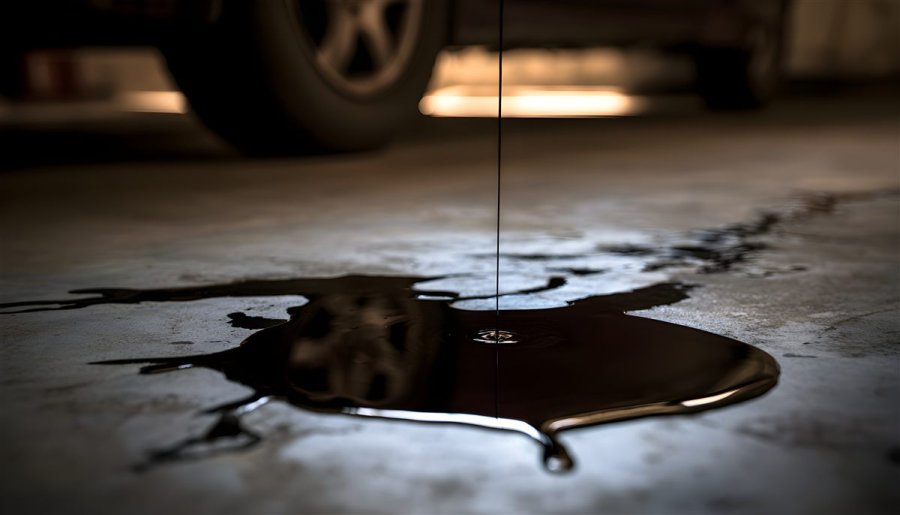
A red or reddish-brown spot under your car can be easy to ignore, especially if the vehicle still drives normally. But transmission fluid is not something the transmission is supposed to use up. If it is showing up on the driveway, there is a leak somewhere, and the important questions are how much fluid has been lost and where it is coming from.
A small leak does not automatically mean the transmission itself is ruined. In many cases, the leak comes from a seal, gasket, line, or another part that can be repaired without replacing the whole transmission. The reason to deal with it early is simple: a small outside leak can become a much bigger transmission problem if the fluid level drops far enough.
What transmission fluid usually looks like
Fresh automatic transmission fluid is often red or pink, although the exact color depends on the vehicle and fluid type. As it ages, it can turn darker red or brown.
Color alone is not enough to identify a leak. Engine oil, coolant, power steering fluid on some vehicles, and even water from the air conditioning can all leave spots under a vehicle.
Location helps, but even that can be misleading. Air moving under the vehicle while you drive can push leaking fluid farther back than the place where the leak actually started.
If you are not sure what the fluid is, do not assume. Identifying the leak is part of the inspection.
Where transmission leaks can come from
There are several common places a transmission can leak. The transmission pan is one of them because it sits low on the vehicle and has a sealing surface around it. The lines that carry fluid to and from the transmission cooler can leak too. A damaged hose, fitting, or line can sometimes lose fluid surprisingly quickly.
There are also seals around places where shafts and axles enter or leave the transmission. Those seals can wear over time and begin leaking.
On some vehicles, the leak may appear between the engine and transmission, which can point to a leak in an area that takes more work to reach.
The important thing is finding the actual starting point of the leak. Replacing the first wet part you see can waste time if the fluid is running down from somewhere above it.
Why low fluid becomes a bigger problem
Automatic transmission fluid does more than lubricate moving parts. The transmission also uses it to create pressure, apply each gear, and carry heat away.
When the level drops too far, the transmission may begin to slip, hesitate before going into Drive or Reverse, shift harshly, run hotter than normal, or stop moving the vehicle altogether.
That is where a leak that started outside the transmission can begin damaging parts inside it.
San Antonio heat makes low fluid even less forgiving. A transmission already short on fluid has less ability to control heat, and summer traffic on the Northeast Side can add plenty of heat on its own.
Can you drive with a transmission fluid leak?
That depends on the size of the leak and how the vehicle is behaving. A few drops on the driveway with no change in shifting is different from a puddle that grows every time you park.
If the transmission is slipping, taking a long time to engage, shifting harshly, making unusual noises, or showing a transmission warning, do not keep driving it just because the engine still runs.
A larger leak can lower the fluid level quickly enough to turn a short drive into a much bigger repair.
If the vehicle is leaving a large puddle or no longer shifts normally, towing is the better move. Sergeant Clutch offers free towing with transmission service.
Do not just keep topping it off
Adding fluid may temporarily raise the level, but it does not repair the leak. There is another problem too: not every transmission uses the same fluid, and many newer transmissions have a specific procedure for checking the level. Some do not have a traditional dipstick at all.
Using the wrong fluid or overfilling the transmission can cause its own problems.
If you do not know the correct fluid and checking procedure for your vehicle, guessing is not worth it.
How Sergeant Clutch finds the leak
At Sergeant Clutch Certified Engine & Transmission Repair Shop, the first step is figuring out where the fluid is actually coming from. The technician can inspect the transmission, pan, cooler lines, seals, fittings, and nearby components.
If old fluid has spread across the underside of the vehicle, the area may need to be cleaned so fresh fluid can be traced back to the real source.
The shop also checks how the transmission is behaving. If the vehicle has been driven low on fluid, it matters whether it is already slipping, overheating, or taking too long to go into gear.
Once the source is confirmed, the shop can explain whether you are dealing with a straightforward leak repair, a fluid service, or a transmission problem that needs more attention.
The goal is not to sell you a transmission because there is a spot on the driveway. The goal is to stop the leak before lack of fluid causes damage that did not need to happen.
What to tell the shop when you call
Tell us where you usually see the puddle, about how large it is, what color the fluid appears to be, and whether the vehicle has started shifting differently. If the leak only appears after a drive or after sitting overnight, mention that too.
Sergeant Clutch is located at 6557 Walzem Road in San Antonio and serves drivers throughout the Northeast Side, Windcrest, Converse, Live Oak, Universal City, and surrounding communities.
If you have transmission fluid showing up under your car or truck, call Sergeant Clutch at (210) 239-1600. Financing is available through Synchrony Car Care, EasyPay Finance, and SNAP Finance.

Transmission trouble?
Towing available. Military & senior discounts. Payment plans, no credit needed*.
(210) 239-1600 Book an Appointment